
How to Spot the Patterns that Keep Us Stuck
And, a life-changing book that I can’t stop talking about.

The Parenting & Life Reframe is a reader-supported publication.
This free weekly newsletter is made possible by the generosity of paid subscribers.
A paid subscription — $8/month or $80/year — includes full access to my deeper essays, practical tools you can implement right away, invitations to live conversations, and our private community space. More than anything, it allows me to continue creating this work thoughtfully, sustainably, and with care.
If these reflections support you, stretch you, or help you see yourself more clearly, becoming a paid subscriber is one meaningful way to support this work.
This week, I read The Big Leap by Gay Hendricks. This is an older book, and it’s one of those that’s been orbiting me for a while—meaning, I’ve heard Gay Hendricks interviewed on several podcasts and I love the concepts he lays out, but I never got the book. Until now. I’ve always said that the right book finds us at the exact moment we need it.
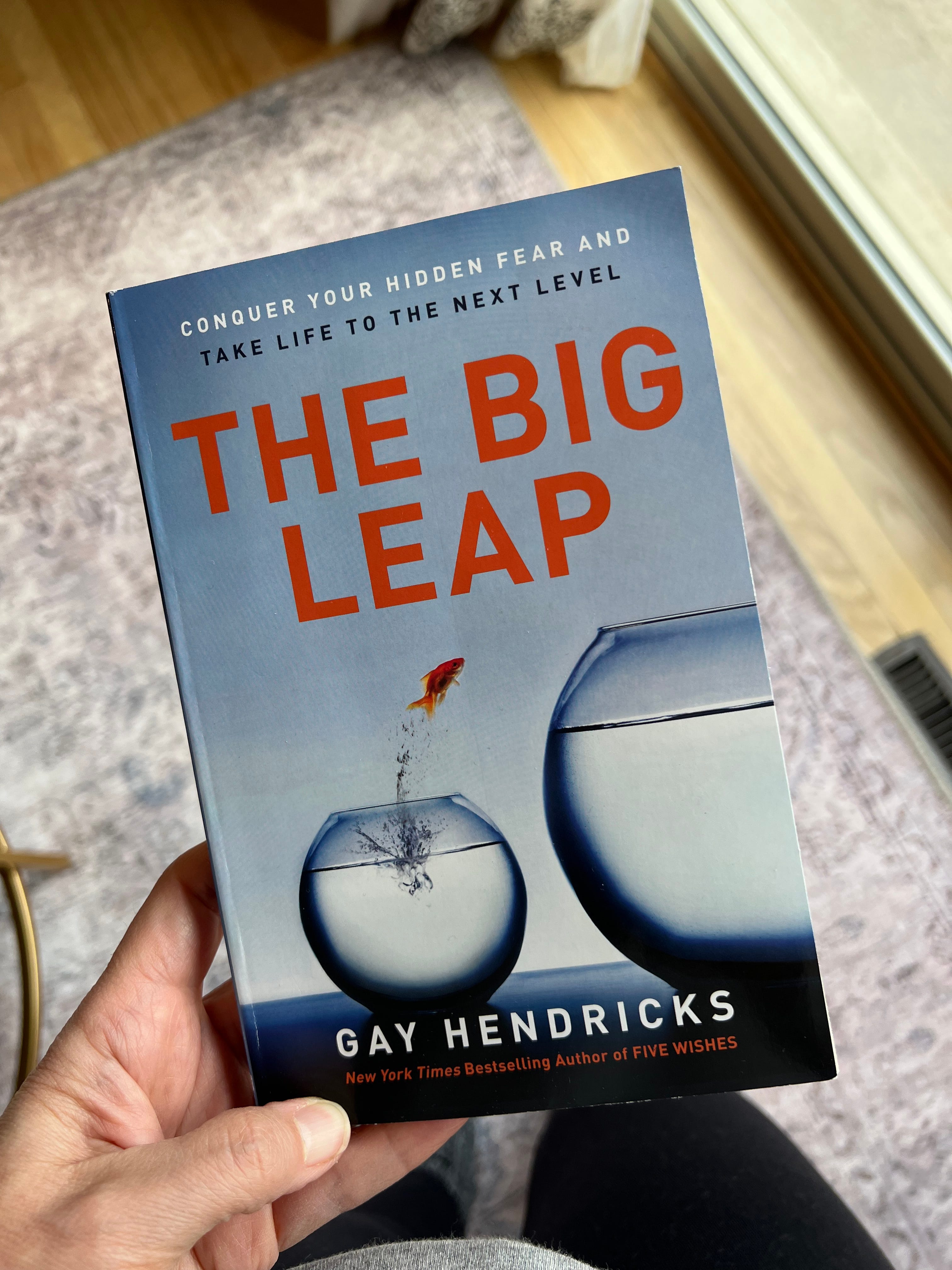
The Big Leap by Gay Hendricks is a personal development book about breaking through the invisible limits we place on ourselves. Hendricks introduces the concept of the “Upper Limit Problem”—the idea that we subconsciously cap our happiness, success, and abundance because of old beliefs about what we deserve. When things start going well, we may create conflict, anxiety, or self-sabotage to return to what feels familiar.
The book invites readers to move beyond competence and even excellence into their “Zone of Genius”—the unique work and way of being that feels deeply aligned, energizing, and purposeful. Through practical insights and mindset shifts, Hendricks challenges readers to expand their capacity for joy, love, and success without shrinking back.
This book is small but mighty. I finished it in a day and a half and handed it to my husband and daughter immediately. What I want to talk about today is spotting our Upper Limit Problem.
At first, I thought, I don’t have an Upper Limit Problem. I don’t self-sabotage, and I can’t imagine why I would cap my happiness. But then Hendricks breaks down how this shows up. I definitely have an Upper Limit Problem. Everyone does.
Two ways this shows up for me are worrying and deflecting.
Worrying
Worrisome thoughts show up the most. I could be having an incredible day, things are lining up beautifully, and then all of a sudden, I will forecast something terrible happening. Or I’ll say something like, “Don’t get used to this; it’s probably a fluke or short-lived.”
For example, November and December were great months for my business—the best since I started. My immediate thought was, It’s probably a fluke. Instead of sitting and celebrating the expansion, I got scared. I started to think about money from a place of scarcity: Let me make sure to save, because I’m sure the other months won’t look like this.
In some ways, I don’t even realize these thoughts have entered my internal chat. They come zooming in out of nowhere. Hence the theory that these subconscious beliefs want to keep us in the familiar, even if, consciously, we’re hoping for something else.
Deflecting
I was on a Zoom call with Elise Loehnen’s paid Substack community (which I highly recommend joining). A woman in the group shared how she is creating something new and was told by a brand expert that it’s impossible to grow on social media today. Hmm, I thought, that’s not true.
Elise, being the dear friend that she is, said, “You should look at Albiona. She has grown an audience of over 300,000 followers all on her own. She’s a great expander for you.”
I shared my insight with this woman and told her how much I disagreed with the brand expert’s advice. But while sharing my numbers and audience size, I immediately began deflecting. I don’t know how I did this. I’m not exactly sure how people decided to follow me. I’m the most unlikely person to have a following.
I had an out-of-body moment. These are the moments where you can observe yourself and hear the words you’re saying—as if you’re taking the moment in as a wiser version of yourself. I saw myself shrinking, hiding, and desperate to make sure I didn’t sound like I was bragging. I also felt afraid to truly own my success.
I was upper-limiting myself. Instead of celebrating what I’ve accomplished and inspiring others, I hid and dimmed my light. It all felt like too much.
The Power of Noticing
With my life coaching clients, we take a deeper look at the patterns that keep us repeating behaviors and choices that don’t yield the desired outcome. This is true in parenting, too. We often stick to one way of doing things, and when it doesn’t work, we assume the problem is outside of us.
If my child listened, I wouldn’t have yelled. If they would stop arguing with me, I wouldn’t have to argue back.
These are patterns. And if they are left uninterrupted, we keep repeating them. Why? Because patterns—patterned behavior—come from our subconscious. We do it almost automatically. And that’s the same way our Upper Limit Problem works — quietly and subconsciously.
Noticing is the practice of observing these patterns and how they get triggered. If we look back at my worrying, it always comes on the heels of something good happening. If I have a win in my business, I immediately tell myself it could all go away if I’m not careful. Since reading The Big Leap, I’ve been using my own tool of noticing and identifying the moments I do this.
Bringing awareness to a pattern invites curiosity. I don’t have my clients change anything at first. We’re simply taking stock and tracking the patterns. Once we have enough data, we can start to see—and even predict—the moments we’ll fall back into them.
That’s when we build in a pause and start to rewire the brain, our patterns, and our thoughts.
For me, when I notice worrying, I don’t try to suppress it immediately. I sit with it. Then I thank the thoughts, because I know they’re trying to protect me. Familiar means safe to our nervous system. If I grow and accrue more abundance, that means I’m thrusting myself into unknown territory. On a subconscious level, this scares me, so my patterning—my upper limiting—says, No, no, don’t get too excited. Safety first.
So I thank the thoughts and the protection. Then I say, I’m releasing these thoughts and welcoming the new that wants to reside here. I trust that I can manage the unfamiliar.
New Patterns
By creating a new pattern, I begin to change how I process different events. I welcome in a new space to create, and I don’t get overwhelmed with worrisome thoughts. I also don’t police myself and insist I stop thinking this way. It’s a practice that takes time.
But when we choose to notice, we can disrupt the patterns that keep our upper limit intact. When left unchecked, our subconscious will always choose what’s familiar.
In Parenting
Similar patterns exist in parenting. Let’s look at parents who over-explain or feel the need to justify a boundary. We know that when we tell kids no—or tell them they can’t have something—it causes frustration. That’s normal. When they’re frustrated, they will likely argue with you.
This is when you resort to a pattern that’s not working. You argue back, insisting on over-explaining and justifying your boundary. Now you’re arguing the boundary instead of just holding it.
The pattern is: when you’re right, you’re safe. If you’re not believed, you’re unsafe, and your job is to prove yourself. You’re not doing this consciously, but your subconscious gets triggered—and you react.
When your child argues with you, notice your pattern. Do you immediately argue back, aiming to prove that you’re right or to convince them that your boundary is fair? Does arguing back help? Or are you and your child both dysregulated and struggling to calm down?
Interrupt the pattern. Notice your need to argue and consider why. Once you spot the pattern, try making one small change at a time. Instead of arguing back, trust your boundary. Remember: your job is not to make sure they know you’re right. It’s to set the boundary and hold it clearly and confidently.
Try interrupting your response pattern—the way you react—and watch what starts to change around you.
Conclusion
Understanding and spotting my Upper Limit Problem has brought me stability and a sense of empowerment. Being able to see the patterns—and attune to the why behind my choices with curiosity—has invited in some critical revelations. For me, these moments feel like magic.
We think change takes a long time, and in some cases it does. But sometimes, change happens the moment we stop abandoning ourselves in the pattern.
Since I noticed my deflection, I’ve been practicing something simple: I stop. I receive. I say thank you. And I let the compliment land.
I own my accomplishments. I’m really proud of what I’ve created. This all started with an idea, and a thought that one day I wanted to write a book.
Notice your patterns. Interrogate them with gentleness. Stay curious. And watch what begins to shift—not because you forced it, but because you finally saw it.
Love always,
Albiona
If this conversation about patterns resonated with you, my Course Bundle is available until March 1st. Inside, we go deeper into the real-life application of this work — especially in parenting — so you can interrupt reactive cycles, regulate yourself, and hold boundaries with clarity and confidence.
It’s my four most popular courses, bundled together at a reduced rate for a limited time. If you’re ready to not just notice the patterns but actively change them, this is a powerful place to begin.

This is both true yet challenging for the single mom who feel that everything is urgent and must be tackled all at once: the heartache, the screaming kids, the unloved kitchen, and the emotions spiraling out of control. Combined, they all serve to distort the control that she really does have, or could have, by focusing on just on thing to notice, or one thing to change, or just one thing to let go.